 Board game
: A game on a board, like Monopoly or Sorry. Get a piece of cardboard or poster-board. Draw a path for the game pieces to follow and decorate them with things you imagine from the book. You can make a spinner, game pieces, game cards, etc., and you could include dice, playing cards, or other game items. Be sure to write a set of rules for playing the game.
Book review: Writing that tells your opinion of the book, including likes, dislikes, favorite parts, and who would like the book.
Cartoon strip: A comic like one found in the newspaper. Draw 4-6 connected boxes on a piece of white paper. In each box, draw a picture from the story with cartoon bubbles for speech.
Cause and effect organizer: An organizer that shows cause and effect. Make a T-chart. Write the effects on the right side and their causes on the left side.
Cause: The reason or why something happens.
Character: A person or animal in the story. The main character is the person or animal that is most important in the story.
Characters: The people or animals with personality that stories are about.
Chart: A picture that shows information, like a t-chart.
Clues: Small pieces of information or hints that help someone figure out a mystery or a problem.
Compare: To find similarities, the things that are the same, among two things.
Concept web: A diagram that organizes large ideas into smaller topics. Write your main idea in the middle of the page and circle it. For each sub-topic, draw a line out of the circle and write your sub-topic on or at the end of the line.
Conflict: A sharp disagreement.
Contrast: To find differences, the things that make things different, among two things.
Critique: An analysis or evaluation of the story.
Crossword Puzzle: A puzzle where clues are given about what words to write in boxes.
Defenses: The ways animals protect themselves from predators, the animals that would like to eat them.
Definitions: Words that tell the meaning of a word, such as the definitions on this page.
Diet: The things an animal eats.
Diorama: A 3-D picture. Get a shoe-box or similar sized box. Use paper, magazine scraps, glue, and coloring supplies to make a scene that stands up inside of the box.
Effect: Something that happens as a result of a cause. For example, rain caused the ground to get wet. The ground getting wet was the effect.
Event: One thing that happens in a story. A story is made up of many events.
Explain: Use words and details to tell all about something.
Fable: A fictitious story meant to teach a moral lesson. Fables usually contain talking animals as the main characters, and often contain legends or myths.
Fairy tale: A story containing fairies, giants, and magical deeds
Fantasy: A story written from imagination, not based on fact.
Folk tale: A story of legendary or mythical characters and events that was told by “common folks” and has been handed down through the generations.
Graph: A combination of pictures and numbers that tell information, such as a bar graph or pie graph.
Habitat: The place where an animal lives.
KWL chart: A chart with three columns: K- Know, W- Would like to know, and L- Learned. Before you read your book, write everything you already know about the topic in the Know column. Next, write things you would like to know in the W column. Finally, read the book and fill things in on the L (Learned) column to show what you learned while reading.
Labeled Picture: A drawing that has words telling about different parts of the picture.
Letter: A note to another person that contains a heading, body, and closing. The body of the letter is written in indented paragraphs, usually three to five.
Life span: The amount of time an animal usually lives.
Mini book: A small book. Get three white sheets of paper and cut them in half the hamburger way. Stack all the halves together and fold them in half again. Staple the folded edges to make a book, and turn your story into a picture book inside.
Mysterious: Something that makes you wonder or want to find an answer, or something that is strange or unusual.
Newspaper article: A short piece of writing that is published in a newspaper to give information about something important that has happened. It usually includes one or two pictures.
Outcome: The events that happen after the problem has been solved.
Play: A story that is acted out for an audience.
Plot: The action of the story.
Pop-up picture: A picture that pops up when opened. Fold a sheet of paper in half and cut two one-inch slits in the folded side, about one inch apart. Open it up, poke the one-inch tab you made through and to the other side, and fold it down. Draw a picture and tape it to the tab. When you close the folded paper, the picture will lie flat, but when opened, it will stand up.
Poster: A large, colorful drawing with some words that gives information about a topic, event, or something you could buy.
Problem: The main conflict, dilemma, or mystery to be solved in the story.
Puppet: A doll that can be made to move or talk, like
Realistic: Based on fact, not fantasy. Describes something that could really happen.
Running list: A list that is made while you read, not after reading.
Scene: A small part of a story or play.
Science fiction: A story set in the future
Script: A set of lines that actors read or memorize in a play.
Setting: The time and place in which a story occurs
Solution: The ending or last part of the story, often where the loose ends of the story are explained or tied up, or the problem is solved.
Story star: An organizer that tells the main information about a book in the shape of a star. Draw a star. Write information about your book on each of the five points of the star. The information you need to write is 1. characters, 2. setting, 3. problem, 4. solution, and 5.outcome. In complete sentences, write about these things on the points of the star.
Summary: A short re-telling of the main ideas, or most important ideas, of a story.
Timeline: A line on which major events are marked, in date order, from left to right. Draw a line and write year a person was born on the left, and the year the person died on the right. Write important events (with dates) in the life of that person along the line.
Topic: The main idea of something, or the big idea that is being discussed.
Unrealistic: Based on fantasy, not fact. Describes something that could not really happen.
Venn diagram: A diagram that compares and contrasts two things. Draw two circles that are slightly overlapped. Label the each circle with one of the two things you are comparing. In the overlapped area, write the similarities (compare). In the non-overlapped areas, write differences (contrast).
Young: An animal’s babies, or offspring.


 Weekly reports will be sent home each Monday stapled to the work your child completed the previous week. The newsletter portion will contain a brief description of the week’s studies, a calendar, and student recognition features, such as perfect attendance and Howling Good News.
 Monday folders are sent home for parents to review each Monday night. They are due back to school, empty, on Tuesdays.
 Click to enlarge the examples.
 16 Ways to Study Spelling is a way to practice spelling words. Sometimes it is homework, but it can be done for extra credit any other time. Write the name of the activity at the top of a sheet of paper. Do the activity on the paper with this week's spelling words.
 1. Attach a green cover sheet to the project with a staple or tape. Write the book title, author, genre, activity, and month on the cover sheet.
 2. Turn your project into the reading drawer. If it is too large to fit, put it on Ms. Hos's desk.

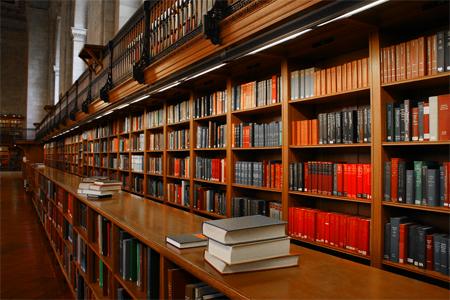
 1. Check out a book from the library. Books in each genre are marked with stickers on the binding. The only genre without stickers are non-fiction books. Animal Nonfiction and Science are in the 500's and Biographies are in the 921's.
 2. Borrow a book from the classroom library. Books in each genre are sorted into tubs with genre labels. Remember, picture books in our classroom library can not be used for book reports because they are not AR books. If you would like to take home your book, please ask Ms. Hos for permission.
 The Never Ending Genre Project is a book report project where you are in charge! You choose you genre, and you choose your project!


